
Durgapur, often referred to as the “Ruhr of India,” is one of India’s largest and most significant industrial hubs. Its development is a striking example of planned industrialization in West Bengal.
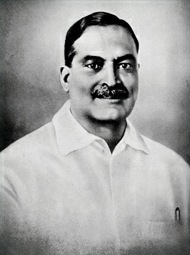
Originally, the area was largely unorganized, but it was transformed through the vision of Dr. Bidhan Chandra Roy, the former Chief Minister of West Bengal. He initiated the industrialization drive that turned the region into the massive industrial chain it is today.
This industrial belt is strategically located between two rivers: the Ajoy and the Damodar, a geographic feature that has played a role in its development.
ADVERTISEMENT
History of the name “Durgapur”
Back in the day, this place was known as Gopinathpur, after the name of the then-landlord Gopinath Chattopadhyay. Later, this area was handed over to his son Durgacharan Chattopadhyay.
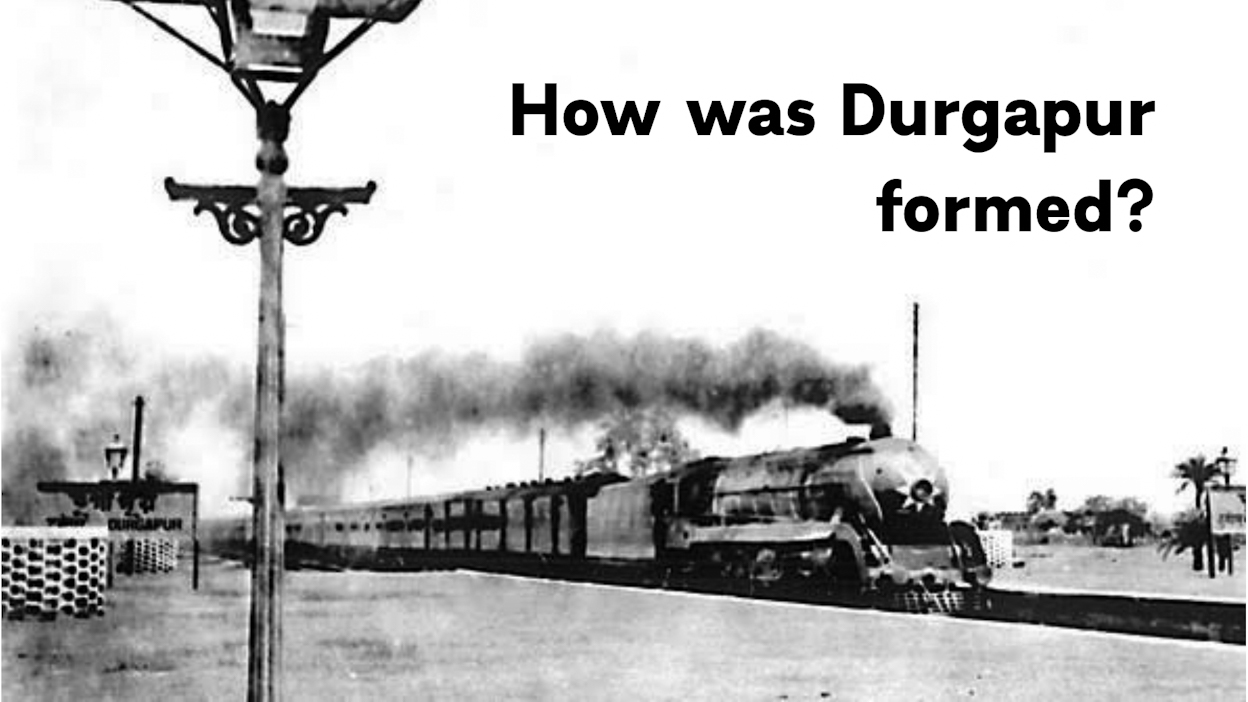
Raniganj was an active coal mine back then. To deliver the coal in various parts, the Burdwan-Ondal railway was constructed. In 1855, a halt station was founded in this area. It was named “Durgapur” according to the name of the landlord, Durgacharan Chattopadhyay.
After a few years, the halt station was converted into a rail station, and it started to gain popularity, as it was very close to Raniganj. A small town started to grow around the station, and the town was named “Durgapur.”
Formation of Durgapur Subdivision
The administrative landscape of the Burdwan district saw a significant change in 1872 when it was divided into six subdivisions: Burdwan, Budbud, Raniganj, Katwa, Kalna, and Jahanabad.
Decades later, the true ascent of Durgapur began, spurred by the vision of former West Bengal Chief Minister, Dr. Bidhan Chandra Roy. His initiatives led to rapid industrialization, establishing numerous factories and cementing Durgapur’s fame as an industrial center. This massive increase in popularity and industrial activity necessitated a formal administrative change. Consequently, in 1968, Durgapur was granted its own status as a new subdivision.
ADVERTISEMENT
Industrial Backbone: DPL and the Barrage
A key foundational element of Durgapur’s industrial base was the establishment of the public sector undertaking (PSU) Durgapur Project Limited (DPL) in 1961.
DPL’s initial crucial project was the construction of the Durgapur Barrage. Furthermore, as the burgeoning number of industries demanded a reliable and significant power source, the DPL power plant was also founded to meet this urgent need for a power plant. With the combination of power generation and access to coal (from Raniganj), Durgapur was well-equipped to support its massive industrial growth.
The establishment of Durgapur Steel Plant
Dr. Bidhan Chandra Roy dreamed of establishing a major steel plant in Durgapur to catalyze industrial growth in the region. He formally proposed the project to India’s first Prime Minister, Jawaharlal Nehru.
Nehru, however, initially rejected the proposal. His primary concern was strategic security: Durgapur lay within a 100-mile radius of the border with East Pakistan (now Bangladesh). Nehru feared that in the event of any conflict, the vital steel plant would become an immediate and vulnerable target for attack.
Despite this significant setback, Dr. B.C. Roy was determined not to abandon his plan.
ADVERTISEMENT
The breakthrough came through an unusual turn of events involving a diplomatic trip to Delhi. Both Dr. B.C. Roy and the then Central Minister of Industry, Nityananda Kanungo, were attending a meeting. During the session, Kanungo suddenly fell ill.
Dr. Roy, who was an eminent physician before his political career, immediately stepped in to provide medical treatment and successfully cured the minister. A grateful Kanungo then offered Dr. Roy any fee he desired for his services.
Dr. Roy saw his chance. Instead of a monetary reward, he asked for a single thing: permission to establish his dream steel plant in Durgapur.
Bound by his promise, Nityananda Kanungo granted the permission. This pivotal moment led to the formal foundation of the Durgapur Steel Plant, and work officially began in 1954.
This single industrial venture became the cornerstone of Durgapur’s prosperity. Since then, the city has developed into a major industrial hub in Eastern India, globally recognized for its wide range of industries, living up to Dr. Roy’s far-sighted vision.
Read Another Article About Durgapur
- Durgapur Utsav 2025 – Date, Timings, Venue, Artist List

- Durgapur to Varanasi Direct Flight Services To Start Soon
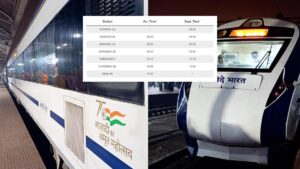
- New Vande Bharat Express To Make A Stop At Durgapur
- IndiGo To Start Direct Flights From Durgapur To Three More Cities
- Durgapur to Chennai Direct Flight Services To Start From May 16
- Srishtishree Mela (Durgapur) 2025 – Location, Timings, Dates